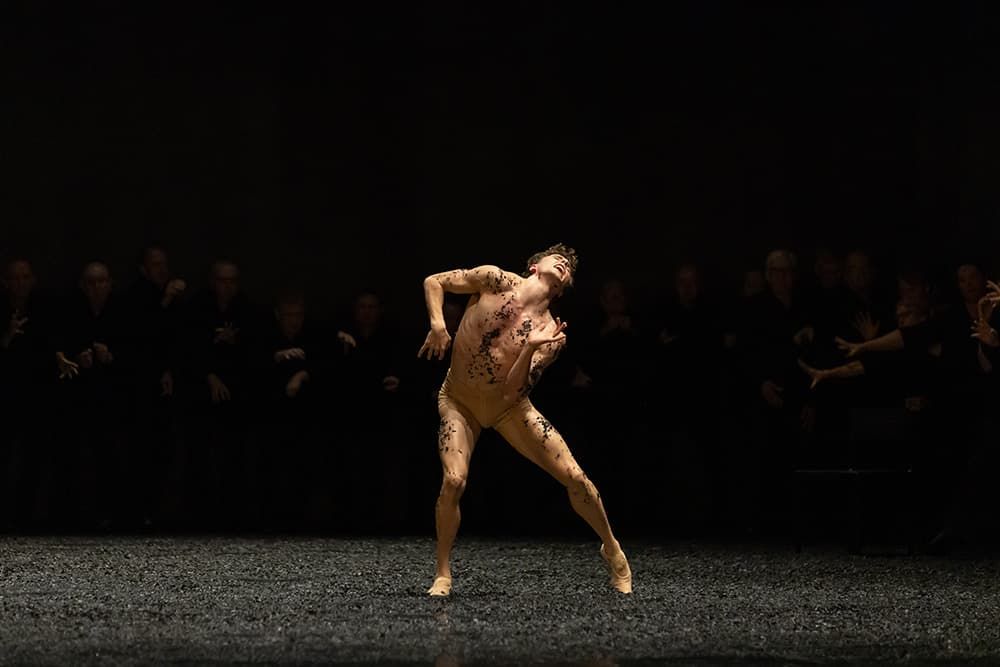
For the opening performance of QPAC’s shiny new Glasshouse auditorium, the Queensland Ballet company was joined by four soloists, two excellent local choirs, and the Queensland Symphony Orchestra in an audacious re-imagining of Verdi’s masterpiece, his Messa da Requiem.
On the face of it, this seemed a strange choice of music for a ballet, as a composer whose music is less suited to ballet than Verdi would be hard to find. His music is the opposite of Tchaikovsky’s, whose music seems to dance even when at its most lugubrious. But that wasn’t the point of this production.
Verdi’s music is imbued with his deep humanism, his sense of the fact that all people share in a common destiny. Verdi was famously a supporter of Garibaldi’s successful campaign to unify Italy in the 19th century, whose battle-cry was “Evviva VERDI”, an acronym for Vittoria Emmanuele, Re D’Italia. This support was rewarded with a seat in the first Italian government in 1861. But he didn’t last a year. He retired, and, disillusioned with politics, wrote little after the success of his opera Aida (in which the patriotic propaganda for the power of the new Italy is questioned by the plight of the Ethiopians) ten years later. The next piece he wrote was the Requiem.
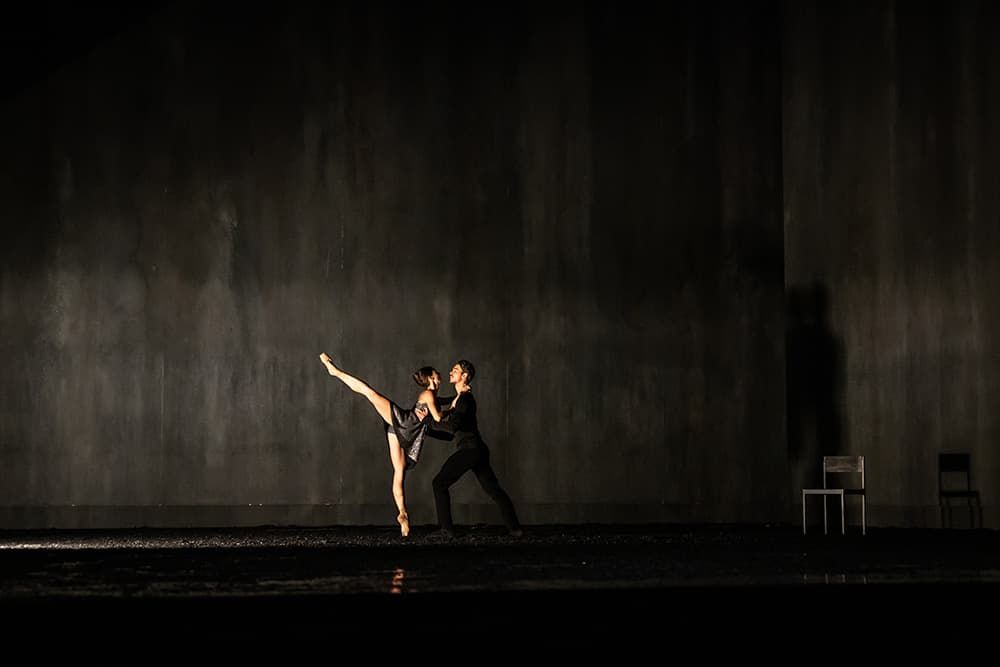
None of this was lost on the choreographer of this show, Christian Spuck. His imagery for the Requiem was generated by a combination of Henri Dunant’s horror at the battle of Solferino (1859), which was fought less than 100km from Verdi’s home in Sant’Agata, and medieval depictions of the Last Judgement, culminating in Michaelangelo’s in the Sistine Chapel. Spuck’s dancers portrayed the agony of dying, and the unlikelyhood, but dim possibility, of redemption after death.
The show, far from being a vehicle for technical displays by the brilliant dancers, was born from a deep respect for the vastness of Verdi’s vision. Was it a dance with music as background? No. Was it a concert performance of a masterpiece? Was it a quasi opera? No, it was something quite new, but which in no way revelled in its novelty.
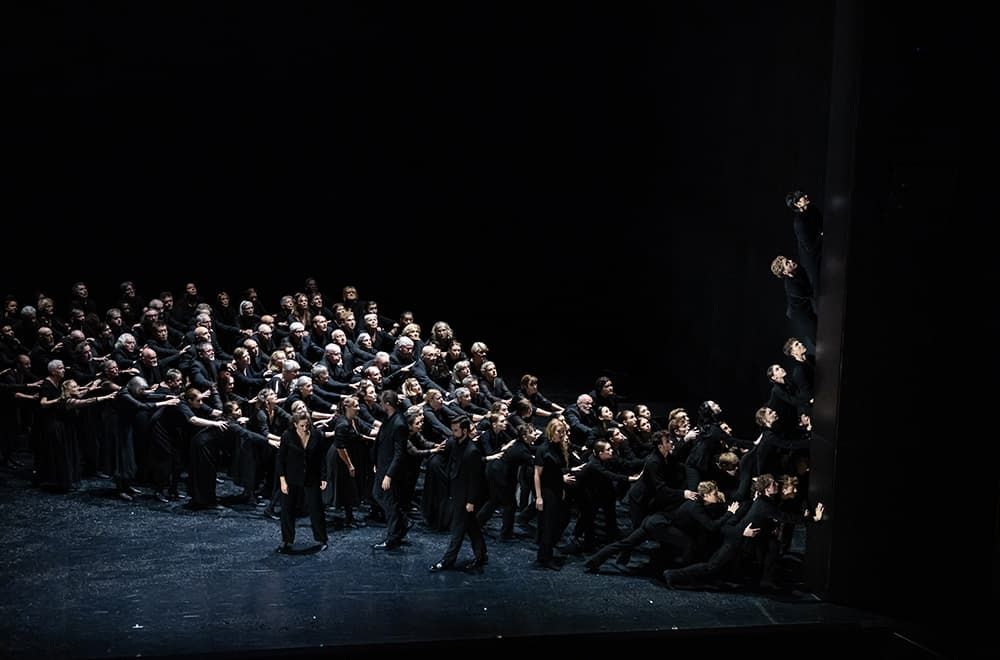
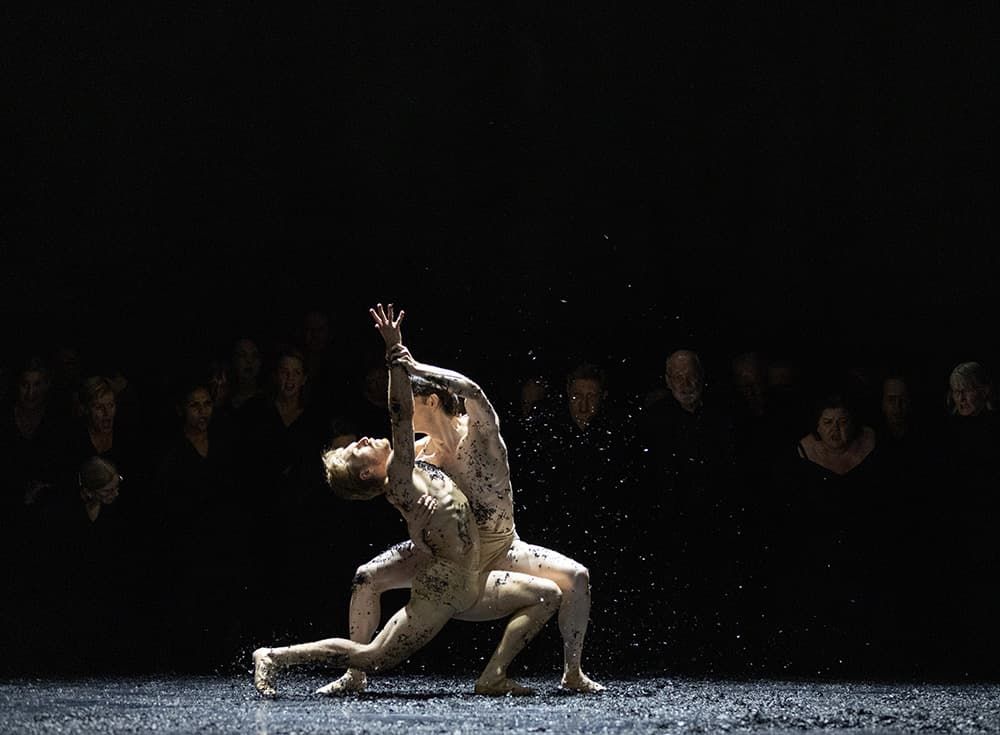
Easily the finest section of the performance was the Dies Irae, half an hour of the most exciting music Verdi ever wrote. Here the chorus were the avenging angels, under whose fatal gesticulating the two male dancers writhed in their nakedness. The chorus sang better when they were involved in the acting than when they were still. When they left the stage (all their movements were choreographed with seriously sophisticated stage technique) the four soloists with their dancers embodied the inner world of despair. Eva Kong and Miljana Nikolic’s Recordare duet was sung with a humility that put their remarkable voices entirely at the service of the psychological drama of the music; the tenor Diego Torre was exactly suited to the wonderful Ingemisco; and Jud Arthur led the chorus in the emotional heart of the performance, the Lacrimosa, in a passage which, beautifully controlled by the conductor Simon Hewett, left not a member of the audience unmoved.
Hewett’s control of the orchestra was particularly well exemplified in the opening of the Hostias, which is marked ppp by Verdi. I remember conducting the Requiem 20 years ago, with Rosario la Spina as the tenor soloist. When we got to that passage in rehearsal he turned to me and said “Nicholas, I can’t hear the orchestra!” But when Torre sang that opening last night, he sang with such purity and delicacy, even though it is written so high, that I’m sure he could in fact hear the band.
Jud Arthur is a true bass, a bass who could be any of the villains in Verdi’s operas. Torre is to my mind a perfect Verdi tenor. Nikolic’s warm mezzo has too strong a vibrato for my taste – but how hard it is to find a mezzo-soprano these days! (I would put in a word for Xenia Puskarz-Thomas). Eva Kong grew in stature throughout the performance, culminating in a breath-taking performance of the Libera Me, soaring above the chorus and orchestra with a shining silver sound of both purity and intensity.
To my mind, however, the most stunning thing about this performance was the chorus. Trained by Emily Cox, it was a combination of her Canticum Singers and Graeme Morton’s Brisbane Chorale. Quite apart from memorizing this huge score, they responded to the elaborate choreography demanded by Spuck with a verve and enthusiasm which infected their actual singing. They sounded so much more alive when they were theatrically involved with depicting the dead. They responded to the questionable octaves of Kong and Nikolic at the start of the Agnus Dei with intonation so pure that it truly sounded like the angels singing to humans.
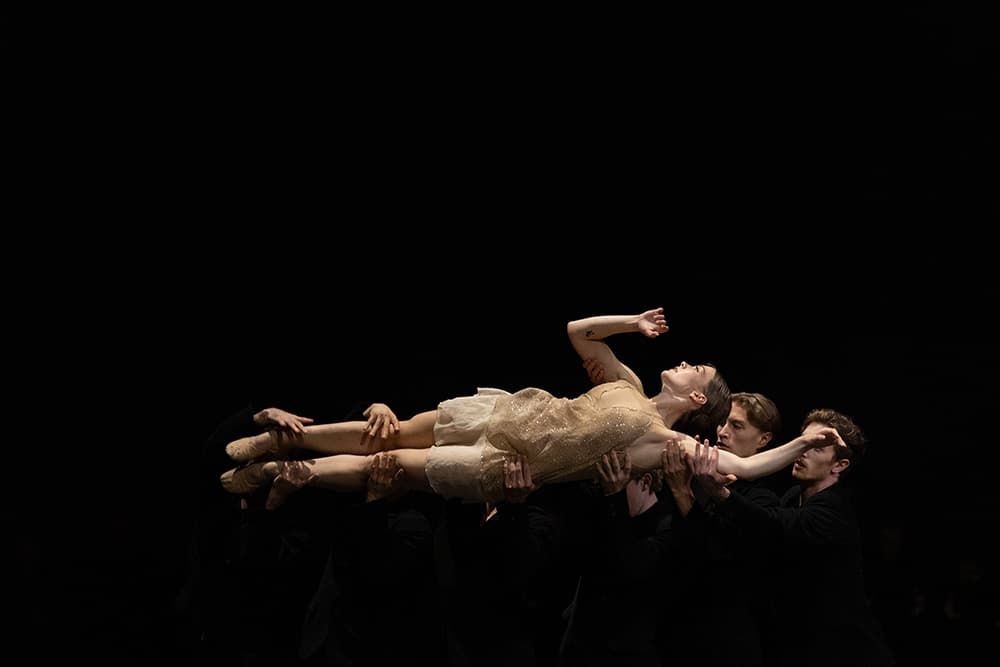
Verdi’s Requiem has been somewhat derisively called his finest opera. I did reflect that this sobriquet was borne out in this performance by the depiction of the dead women, who were routinely held aloft and trust-dropped throughout the performance. It reminded me that, as Catherine Clément pointed out in case we hadn’t noticed it, that in 19th century opera it is the heroines who always die. But to his credit, whenever Spuck ran out of ideas of what to ask the dancers to do, he simply let the singers have the floor. How very refreshing, in a world where redundancy and overstatement spills constantly into our theatres. And this refusal of egotism was the secret of the way this performance was allowed to touch the hearts of every member of the audience.
Messa da Requiem was a quite stunning way to inaugurate the new auditorium. Its architecture reminded me of Wagner’s theatre in Bayreuth, still the finest opera house in the world with its steeply raked seating and almost no side boxes. Its wooden walls are admirably conceived to enhance the acoustics of the hall. My only gripe about the acoustic is that some of the immense sound from the stage disappeared up into the flies. A wooden ceiling over the stage would have, in my opinion, considerably brightened up the sound of the chorus. Of course this affects the possibilities of lighting, but there are many ways around that problem. But as a venue for opera I think the Glasshouse has a great future.
Event details
Queensland Ballet presents
Messa da Requiem
Giuseppe Verdi
Conductor Simon Hewett
Venue: Glasshouse Theatre | QPAC, Russell St, South Brisbane QLD
Dates: 27 March – 4 April 2026
Bookings: www.queenslandballet.com.au
Gallery