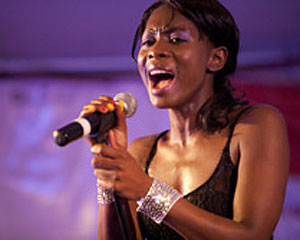
 Left – AJ Davita
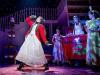
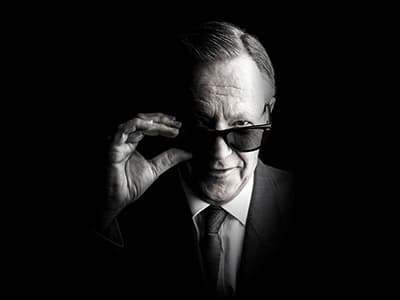
Vivaz is a Latin-American nightclub, bar and restaurant tucked away on George Street, in The Rocks. It's been there for quite some years now and, thanks to peripatetic and irrepressible impresario, Dave Keogh, is about to enjoy something of a renaissance, with its South American pedigree broadened, under the banner of Equator. In short, it's set to become Sydney's home of world music. Equator launched last Thursday, with a focus on 'Afrika', featuring two of Sydney's most explosive acts, sourced, or partly so, from that continent: AJ Davita and Keyim Ba.
AJ (Angela-Joy) kicked off the night, with two exhilarating sets. Originally from Makonde, Zimbabwe, she emigrated to Australia, at just eighteen years of age, to study on the Gold Coast. While there, she hooked-up with fellow Zimbabweans Moira Makanda and Antoinette Dadzi, to form r 'n' b outfit, On2rage. Their debut single, Let U Go, produced by the renowned Audius Mtawarira, took even their home continent by storm. With a degree already under her belt, AJ headed to Sydney to complete a Bachelor of Contemporary Performance at the Australian Institute of Music.
An apparently naturally confident performer, AJ commands attention by way of her charismatic presence, powerful vocals and dynamic, uninhibited dance moves. In terms of boundless energy, she reminds me of the tireless Angelique Kidjo and, like her, AJ's musical base stretches from the traditional (think Brenda Fassie, Oliver Mtukudzi, Ringo Madlingozi, Malaika and Audius Mtawarira) to the contemporary, and almost everything in between.
Forget genre: jazz; blues; r 'n' b; funk; soul; rock; pop. Nothing is off limits. AJ can, will and does tackle practically anything and bend it to conform to her own shape and style; whether it's Tina Turner, Beyonce, Kanye West, The Supremes, Aretha Franklin, Randy Crawford, Marvin Gaye, Stevie Wonder, Michael Jackson, John Legend, Rihanna, Alicia Keys, Jessica Mauboy, Neyo, Lady Gaga, Fiji's J Boog or Jamaica's Brick 'n' Lace. When she does their material, she makes it all her own, whether singing solo, as half of a duo, a third of a trio or with a four, six or eight-piece band.
For the Equator launch, she came perilously close to her full-blown lineup, with an improbably young and almost impossibly gifted seven-piece (ten, if you count backing singers): AJ on lead vocals; on BVs, Sandra, Janice & Lizzie; keys, Kurtis Russell; conga and trumpet, David Hughes; sax, Callum Jan; guitar, Dave Regina; bass, Damien Macchi; drums, Monica Spasaro.
Interestingly, all Caucasian; something of a tribute to young Australian musicians, given the tricky rhythms and patterns common to much African music, which one could be forgiven for thinking you have to be born into and steeped in to really get. But this bunch discredit any such notion.
Sandra, Janice and Lizzie sound a little more pop-oriented than 'black-powered' and the harmonies could've been arranged more interestingly, but they sound sweet to the ear regardless. It's always refreshing to see a young woman on drums and Spasaro is across all the exotic rhythmic figures that arise in African music. Regina is an outstanding young guitarist whose lead breaks exude a rock sensibility, while Jan and Hughes reed and brass combo has a shiny, showy Las Vegas showband shimmer. Hughes is very proficient on percussion, to boot. Russell's keys are the very quintessence of slick, professional musicianship.
For the first set, AJ kicked off with a couple of Fassie faves; Thula & Vulindlela. Brenda was an outrageous South African pop singer whose political importance can't easily be exaggerated, since she stood as a voice (if not the voice) for black people during the appalling, prolonged reign of apartheid. She's been called the 'queen of African pop' & 'madonna of the townships' and one can hardly help but feel that when AJ sings Thula, she takes on all the pathos that attended Fassie's short, dramatic life. Thula, of course, has one of those African choruses that wraps around you like a doona on a cold night and I believe was inspired by a Zulu lullaby. It means peace and quiet.
But AJ is hardly one to stay still, peaceful or quiet. She's a diminutive dynamo, as she proves with Vulindlela, a song also written in Zulu and one which could almost come with an ironclad written guarantee to bounce any blues that might afflict you. I only wish I knew what it all meant.
Soweto-born Freddie Gwala's Amadamara is another, eminently danceable, feelgood song, but with that undercurrent of sadness that's distinctly African in character. (And you've got to love a man who describes car theft, for which he did time, as repossession.) Amadamara was Gwala's breakthrough hit and AJ brings her own world of soul and commitment to the song. It's clear she reveres this music.
Dzokauyamwe was written by Oliver Mtukudzi and affords Regina some bright and breezy moments on guitar. Like AJ, Oliver is Zimbabwean, so I imagine this song has particular significance and meaning to her, upon which we can only but speculate. But that doesn't mean we can't take our own meaning from it. As best I've been able to translate, this is a song about home. About longing for home. About finally going home. Reconnecting with one's roots. One's origins. One's beginnings. One's family. And everything that goes with it. Memories, good and bad. Community. Culture.
Just as Africa is the cradle of humanity, going home, for a Zimbabwean, means returning to nurture and the cradle. The lyric also reflects on badness. On judgment. On prejudice. 'What makes a person bad is what is inside them; what makes a person is the way their mind works.' Here we find a profound beauty of African music: that one can move to the music, while also exercising the mind and spirit. That's precisely what AJ seems to do. Her own. And ours.
Me and You is a Bracket tune. Bracket being a Nigerian duo (pared down from a trio) that's enjoyed considerable, serial success with their sweet hiphop, r 'n' b & Afrobeat flavas. So this was AJ's all-African set; save for the last, Boog's Let's Do It Again. Boog is, as I've mentioned, Fijian. Fiji might be a small nation but its islands are the product of 150 million years of volcanic activity and this song is hotly romantic. AJ ensures its geothermal properties are there in explosive proportion.
After a set so energetic that, if I were to perform it (which is neither something you'd want to hear or see), would necessitate about fifteen weeks of recuperation, AJ was back on deck in about fifteen minutes flat, writhing and vibrating, acrobatically and sensually; as if possessed, exorcising an ancient fertility rite. It's explicitly sexual and supercharged, but it's she who has total control, even while completely letting go. It's a conducive choreographic setting for Love is Wicked, brought to us by pneumatic sisters Brick 'n' Lace, and now AJ. It's a reggae fusion that will make you perspire. If you like the Diwali riddim, you'll be happy as Homer with a deep-fried Mars bar, since it's Lenky Marsden's dancehall beat that underpins this hit.
AJ then took us back to Zimbabwe, with Trompies' Sweety Lavo. (The) Trompies grew up together in Soweto and have emerged as a musical force in South Africa, specialising in kwaito, a form of house that draws, naturally, on African sounds and samples. Take garage and slow it to a snail's pace and you're getting the idea.
Ringo Madlingozi's Sondela (which means come closer, in Xhosa) is an ambitious song to sing, as Ringo has laid down a soaring vocal. Thankfully, AJ is every bit his match and arguably makes a truly ebullient love song even more supple and tender.
She must surely be a big Fassie fan, 'cause AJ regaled us with yet another song from that lady's repertoire, in Nomakanjani which, apparently, is liable to be on the playlist at just about any Tongan party, if you happen to land in Nuku'alofa.
P Square's Gimme That is an out-and-out, through-and-through, shimmying, booty-shaking dance number and AJ gives it all she's got. And that's a lot. It made for a punchy penultimate closer.
But it was Malaika's Afropop pep pill, Mhla'uphel'amandla, that, regrettably, saw AJ and band off. She's a magnetic performer that presides over an audience with authority; again, not unlike Angelique in character. Vocally, she's just as assertive; robust, yet refined ('though she can get really raucous); sassy, yet soulful; sounding like she was born to sing and has been doing so since emerging from the womb. A strong and immensely talented young African-Australian with an enthusiastic and gifted band.
We needn't have fretted about their departure. Keyim Ba was up next. It was almost as if we were actually in West Africa. Maybe it was a matter of getting it right for the room, or something, but AJ's sets were plagued by an indifferent, indistinct mix, which was, happily, resolved by the time Keyim Ba hit the small stage ('specially relative to the grand scale of the venue).
Sibo Bangoura beams, exuding peace and goodwill. He originates from Guinea and fronts Keyim Ba, on vocals, kora and djembe. His vocals exactly match the warmth of his presence and he's skilful enough on djembe, but it's when he occasionally picks up the kora that one realises just how gifted he is, for he rivals revered kora masters such as Mamadou Diabate, or even the direct descendant of its inventor, Koriyan Musa Suso, but with a prolific style all his own. Keyim Ba means beautiful, I believe, and Sibo alone is the living proof of the truth in so naming the group.
Moussa Diakite is from Mali and is, without a word of a lie or hint of exaggeration, one of the finest guitarists I've ever heard. Not only a maestro, but a player of exceptional, exquisite style, judgment and taste. Which should come as no surprise, since he used to play with Salif Keita.
Ghanaian export Paula Baxter is a wonderful singer and the only shame on this occasion was that, as backup vocalist, she had so little opportunity to show it. Still, let's be grateful she was there.
Australia's very own Blair Greenberg, whose multifaceted musical reputation precedes him, was on rhythm guitar and djembe.
The pop-eyed Yacou MBaye, from Senegal, distinguished himself on sabar (a long drum resembling a small conga, played with hand and stick), doun doun (a double-ended, mellow bass drum) and, especially, the explosively loud and aptly-named talking drum.
Simon Olsen, 'though light-skinned, has Malian roots and is a sensational, world-class bassist. (I take it he's temporarily, or permanently, replaced Jean Gomes.)
Aussie Julian Belbachir was belting it out, brilliantly, at the kit, while Sibo's wife, Rachel, lent support on backing vocals and convinced, without a shadow of a doubt, that white people really can dance, after all.
(Sibo's brother, Mohamed, another djembe genius who co-founded the band pin 2009, seemed to be missing in action, for whatever reason. Singer-songwriter Miriam Lieberman is also usually out front.)
Wule sounds like the real West African deal and is, but much of Keyim Ba's music has been influenced, informed, and infused with outside influences, such as reggae, funk and rap. No one can doubt the unmistakable authenticity of the group's powerhouse percussion though, counterpointed by the most cultivated melodies. Wule, with its primal, polyrhythmic djembe intro and cascading kora, is entrancing.
Fanta appeals similarly, with its languid, loping tempo, while La Guinee is more upbeat and extroverted; as its name suggests, an homage to Sibo's homeland, it hints at reggae, seems to have quite pronounced jazz and blues feedback that affords Diakite a little room for slick licks, space for Baxter to show just what she's made of, an enthusiastic rap break from Sibo, even rock 'n' roll 'yeah, yeah, yeah!'s; not to mention Rachel's inspiring physical exuberances. The fact it's in French no more prohibits understanding than when other languages are deployed: there's a universal understanding factor in play.
The same mood is indulged with the funkier N'Khgounie (or N'Khougnyi, depending which source is correct), an opening for Olsen to strut his stuff, bigtime, with an impassioned, exhibitionistic solo. Thrilling percussion (with excitement generated by both djembe and talking drum) and rousing harmonies are also hallmarks. But even amidst the danceability is that almost mournful 'dark night of the soul' sadness that so often seems to pervade West African music in general.
There's a cacophonous, elemental drum-and-voice tune and much more. To be honest, by this time, I was well-and-truly lost in the moment, as unannounced songs merged into each other, in an almost continuous segue of sensuality. So forgive me if you're an ardent fan and I've neglected to mention one or another of your favourites.
Reggae incorporates that genre, of course, but also nods to its precursors, in rocksteady and even ska, before launching into a ranting, raving, rapping interlude that implores audience involvement, with a uninhibited chorus of 'yeah!'s.
High Life rollicks along and put me immediately in mind of Bo Diddley, whose African roots have obviously not been lost on him. Again, some sweet harmonies and a jubilant jingle-jangle of guitar, anchored by a plodding bassline (that later evolves into another breathtaking break) and electrifying intersection of percussion get the joint jumping (or should that be djembeing).
Funk begins with a straightforward kick-drum, but Yacou gets wild on talking drum, before the band paints the room loud, proud Brown.
It's the final moment to thank Keyim Ba for being in the house. I'm just thankful to have been in the same place, at the same time. Walking back into the uncharacteristically temperate late night, up George Street, everything seemed much more laid-back than usual. But maybe it was just me. Either way, it was a blessing.
The notional equator divides the world into two hemispheres. Dave Keogh's Equator melds them, seamlessly, back together. It isn't just a vision for music. It's a vision for humanity.
Equator Launch
Venue: 80 George Street, The Rocks Show map
Date: Thu 2 Aug, 2012
Tickets: $20.00
Visit: http://www.equatormusic.com.au