Any play by Samuel Beckett is likely to provoke fruitful thought, discussion and controversy amongst audiences and critics alike. Ever since he burst into the awareness of theatregoers with Waiting For Godot in 1953, analysts, academics and reviewers have argued about it and searched for new meanings hidden in its lines.
Krapp’s Last Tape from 1958 is no different in this regard. Some are ecstatic as they revel in one of the most rewarding 55 minutes they claim ever to have experienced in theatre, and delve deeply into the bowels of the play, seeking hidden depths and significances. At the other end of the spectrum are the ones who join Hans Christian Anderson’s little boy, who exclaimed, “The Emperor has no clothes!”, and claim that it is the worst play they have had the misfortune to witness, and call it “simply ridiculous and an embarrassment”.
Certainly there is grist for the discussion mill in this remarkable, one act, one actor play, in which a 69-year-old man reminisces as he plays, tapes from 30 years ago. With both ecstasy and regret (or neither) and re-lives some of them in his mind. Does he feel despondent at lost opportunities and false hopes? Or is he merely revelling in the memories of tenderness and intimacy? Or is the play just too long and too slow and too dark for some?
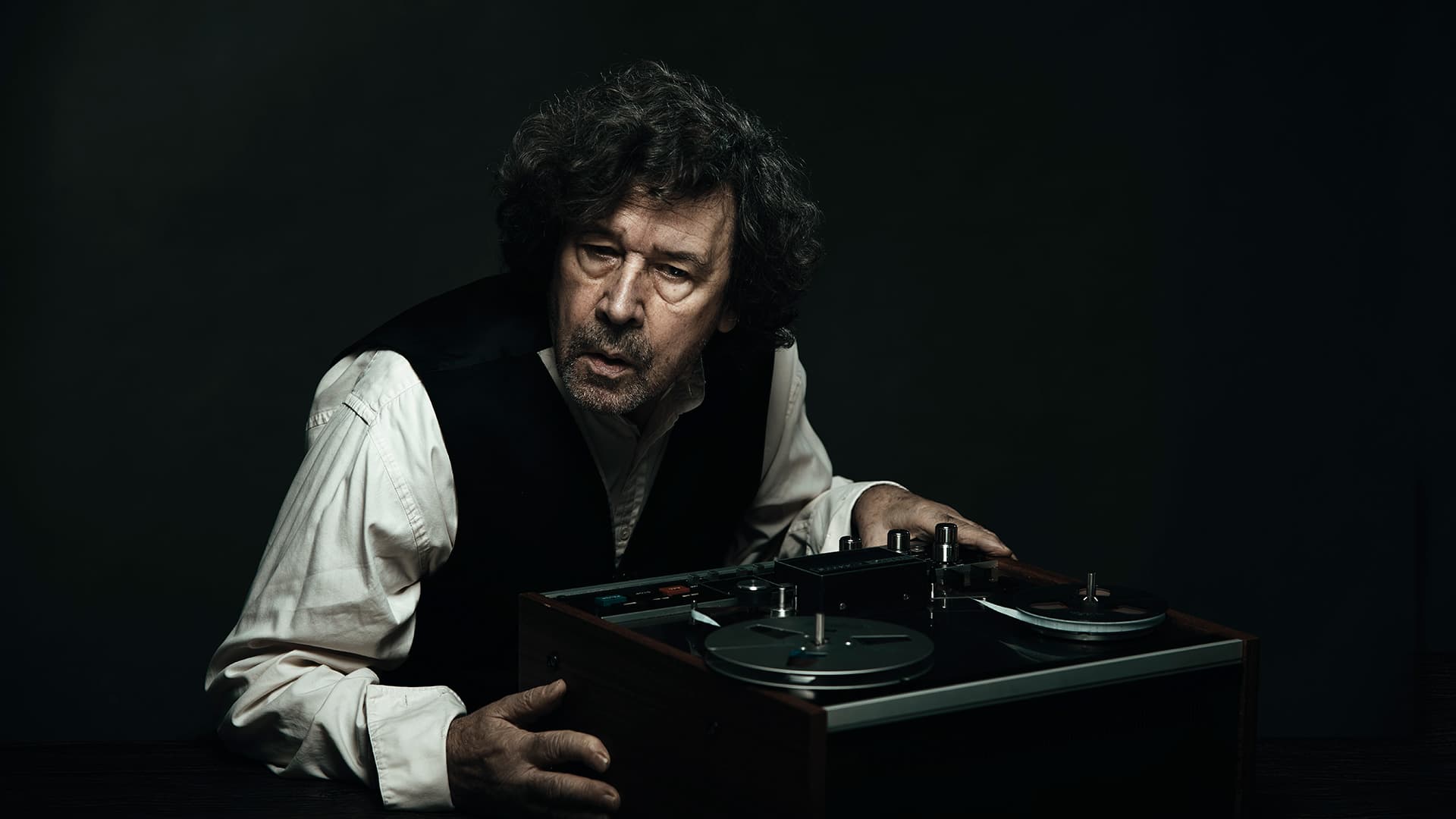
This production is in the hands of a very professional team. Stephen Rea is a seasoned and accomplished actor, who makes the most of every line and every pause. His career sprang from Dublin to critical acclaim on both sides of the Atlantic. The fact that he recorded the tape sections of this play himself some 12 years ago, to provide vocal continuity in case he ever had the chance to play the role, adds charm and poignancy to his performance.
He is directed by his longtime colleague Vicky Featherstone, who is equally highly accomplished throughout the UK and internationally, in particular for directing world premieres by some of the world’s leading playwrights.
The stark, simple set (Jamie Vartan), and the sharp-edged lighting (Paul Keogan) emphasise the isolation of the old man. So does the subdued soundscape (Kevin Gleeson) with the gentle, but ominous rumble during the long, wordless opening, and the cavernous echoing of the footsteps, each time, the old man goes backstage, as he retrieves, tapes, a book, a dictionary, and opens a bottle (which may or may not indicate a drinking problem).
There is a poignant note when the old man lovingly caresses the tape recorder as he listens, and re-and re-listens to a tender tryst in a boat from some 30 years ago. Some may find meaning in analysis of this while others may see it merely as banal superficiality.
So whether you want to find deep meaning and symbolism of a transitory mortality, evoking our own mortality, as the tape continues and the play stops, or if you just think that Beckett ran out of ideas and stopped writing, will be up to you to decide. But the process of deciding requires that you go to see this quite remarkable play, especially with someone with whom you can discuss it.
Event details
Landmark Productions presents
Krapp's Last Tape
by Samuel Beckett
Director Vicky Featherstone
Venue: Dunstan Playhouse, Adelaide Festival Centre | King William Road, Adelaide SA
Dates: 27 February – 8 March 2025
Bookings: | https://premier.ticketek.com.au
Part of the 2025 Adelaide Festival