 You just never know where, or when, really good theatre is going to present itself. In the last few days alone, I've discovered SUDS, Sydney University's Dramatic Society which, if I have it right, is Australia's longest-running (or, at least, continuously so) theatre company. Astonishing. Why haven't I come across it before? More's the pity in light of two works which, I gather, fall under the auspices of the uni union's Verge Arts Festival: one, reviewed earlier, at The Cellar Theatre, on campus; the other, fast running out of season, at the Tap Gallery Theatre.
The last, Heart Dot Com, is an ambitious project involving multiple writers, directed by Olivia Satchell and produced by the equally fearless Liz Toriola. Satchell humbly declares this as her first independent production, but that's misleading, since she's something of a theatre veteran, as performer, assistant director and director, mainly by way of SUDS, but also PACT, GRIFFringe, New, Carriageworks and so on. And it shows, for this is as tight a production as you're likely to encounter anywhere. She has an actor's focus on text and performance, using lighting, composition, sound, props and other craft only to enhance and advance those primary disciplines. It's mature, refined work.
The writers involved include Ellana Costa. She may have only just completed her studies, but she already has quite a resume which, among other notable highlights, includes winning STC's Young Playwright Award, for The Yellow Dress. Luke Carson, even as I write, is putting in a distinguished performance in Morph, at The Cellar. He joins the apparently swelling ranks of actors who write (Morph is also written by an actor). Alison Rooke has a growing profile, by dint of a growing reputation and resume, also. Following this production, she has work in A View From Moving Windows, for Riverside's True West festival. Katie Pollock's cv is as long as your arm. Currently, she's adapting her play, A Quiet Night In Rangoon, for Radio National, among other things. Jasper Marlow, not content with credentials as a producer and screenwriter, writes for theatre too. He hopes to complete a new play and short film before the imminent Armageddon.
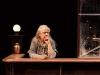
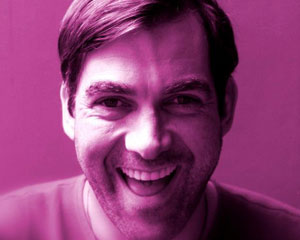
The format is a series of short vignettes, with precious few props and precious few actors. Not all the material is riveting or completely resolved, but there's nothing at all lame here. Luke Carson's piece, played by Paul Hooper, is an ideal marriage of text and actor; thanks, no doubt, to judicious direction. Hooper plays Jake, a desperately seeking Susan, Jill, or Madeleine, gardener. With a single, diffuse spot trained upon him, Jake looks into an imaginary camera and nervously imparts almost every skerrick of salient info about himself he can bring to mind. It is, at once, charming, clueless, endearing, tragic and embarrassing. Carson has observed the digital dating game with a keen eye and it informs his text, such that it's entirely believable and relatable. Hooper makes Jake a real, likeable, salt-of-the-earth, bloke-next-door character. Even his screen name makes one's lip curl: hubbyforyou22. Carson's humour is gentle, too. Jake goes on to explain that he's actually 36, but it's hubbyforyou22 as the higher numerals were already taken. Yes, it's cute. Jake enumerates everything he can do for a prospective mate, with touching sincerity. He's good for a lamb roast and a bottle of cab sav. It's almost tear-jerking. He wants to fill the spot in the bed that's always cold.
Barb is very different to Jake. Madeleine Jones fills her shoes, in Pollock's text. Barb's a stop-go girl. Well, a stop-slow girl. As she explains with some frustration, there's no sign that says go, only slow. Jones is good but, while the roadside, safety-jacketed setup is original and arresting, it seems a shame, in a way, to break with the outright simplicity of the preceding scene. And while there's something poetic about Barb's penchant for viewing the world from above, the idea of climbing the bridge with her vertiginous boyf breaks with believability and, as a result, Pollock's text lost me. It may not have been any more contrived than the former scene, but it seemed it. Throwing the B52s Rock Lobster in, for no apparent good reason other than some kind of concession to cool, didn't help. It's not that it was any way poorly written. It's just that it didn't have the naturalness of Jake.
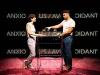
Ellana Costa conformed better to what seemed like the essential shape of the overall work, taking a similar approach to Carson. Randa Sayed fronted as Georgina. Her ambition, 'in an ideal world', to be a curator at the Museo del Prado seemed like a rather pretentious nod, but was immediately redeemed: 'in the real world, I'll probably be a tour guide at the Art Gallery of New South Wales'. In a well-paced exposition of her personality, interests and predilections, we learn of her desire to find a same-sex lover; not because she's a lesbian, but because she doesn't want to forego one of life's pleasures. In her own words, 'I’m not willing to give up the opportunity to experience something that could be amazing because it isn’t my, um, instinct, for lack of a better word'. Costa seems to have a sensitivity to the very cadences of speech which endow mere words with real meaning and feeling. Better yet, so does Sayed.
Tim Reuben mightn't look like the rough 'n' ready locksmith that I last remember engaging, but he nonetheless wears the occupation reasonably well as Mark (Marlow's text). Again, though, being pommelled with a sockful of doorknobs by one's sibling is likely to leave one rather more broken than Mark seems to be; that is, if one managed to physically survive it, which seems a little unlikely. Puns about lovemaking and lock-picking were rather obvious devices and, as such, a bit tedious. The saving grace, if it can be called that, was the clever conceit which had Mark pre-empting the reactions of prospective dates viewing his video. 'Occupation? I’m a locksmith. DON’T ROLL YOUR EYES. It’s a job. Sorry if that doesn’t fit into your sophisticated fantasy of an inner-city gynaecologist, but everyone has a lock. Not everyone has a broken vagina, am I right? So before I’m judged, sweetheart, take a breath, pour another shiraz and calm down, you hypothetical bitch!' But even this seemed to lack a certain amount of real-world cred.
Rooke endowed us with Ben, an undertaker, played by Felix Gentle. Ben relates his sordid experience of a recent date to a friend. But this, too, lacked the sense of candidness and emotional truth that so distinguishes Carson's piece, or the disarming, confessional honesty and originality of Costa's.
The characters return in scenes following, in interesting ways (though, I have to confess, Jake's was lost on me). In ruling out bankers, accountants, tv presenters and lifeguards, Barb embarks on a rant about the almost psychopathic over-emphasis on career that seems to so overwhelm and poison our culture. She doesn't want to be happy, 'because looking for someone to be happy with takes too long'. She doesn't want you to be happy, either. She's had enough happy. Her parents were Hare Krishnas and happy isn't sexy. Again, there's a pointless, throwaway, try-hard musical reference, to Sid Vicious but, otherwise, this is an arresting, well-written scene, notwithstanding some distracting indulgences.
Georgina's recollection of a date, in London, with an Aussie guy she met at the pub (in Shepherd's Bush), was almost cinematically vivid. A lucid description of the detail of her first-ever outing to see a symphony orchestra, it conjures all the terrible, palpitating, perspiring hyper-reality of fresh attraction. His lateness. His apology. Her inappropriate impulse to clap when the orchestra fell silent midstream. Her allergic reaction. Swollen face. His cologne. His decision never to wear it again. So well-written we can cherish the memory almost as closely as Georgina.
Mark returned with his trigger-happy nastiness, bemoaning awkward silences on dates as the killers they are. There's something more than a little disturbing about his monologues. Perhaps Marlow is issuing a warning that it's a jungle out there, in cyberspace. I don't know.
Ben's reappearance was better. It's deft, inasmuch as his heart is on his sleeve and, even in pitching, sensitively, for a new soulmate, he keeps relapsing into the one-and-only relationship for which he still pines. 'I hate that I was too scared to tell you how much you meant; that I didn't fight for you more'.
Costa and Carson's contributions are heroically good. So are Sayed's and Hooper's. Satchell (with Maddie Miller showcasing some skill as lighting operator), however, unifies and vivifies all the work, such that it could almost have been written by one writer. Any textual deficiencies tend, therefore, to be quickly and easily forgiven, allowed to go through to the keeper, in deference to the cohesiveness of the whole. For a director to not only successfully integrate but effectively improve the scratchings of such a diverse group of writers augurs very favourably for a bright future.
HEART DOT COM
by Katie Pollock, Alison Rooke, Jasper Marlow, Ellana Costa, and Luke Carson
Directed by Olivia Satchell
Venue: The TAP Gallery | 278 Palmer St, Darlinghurst, NSW
Dates: October 3 - 14, 2012
Tickets: Adult $20 | Concession $18
Bookings: http://www.trybooking.com