
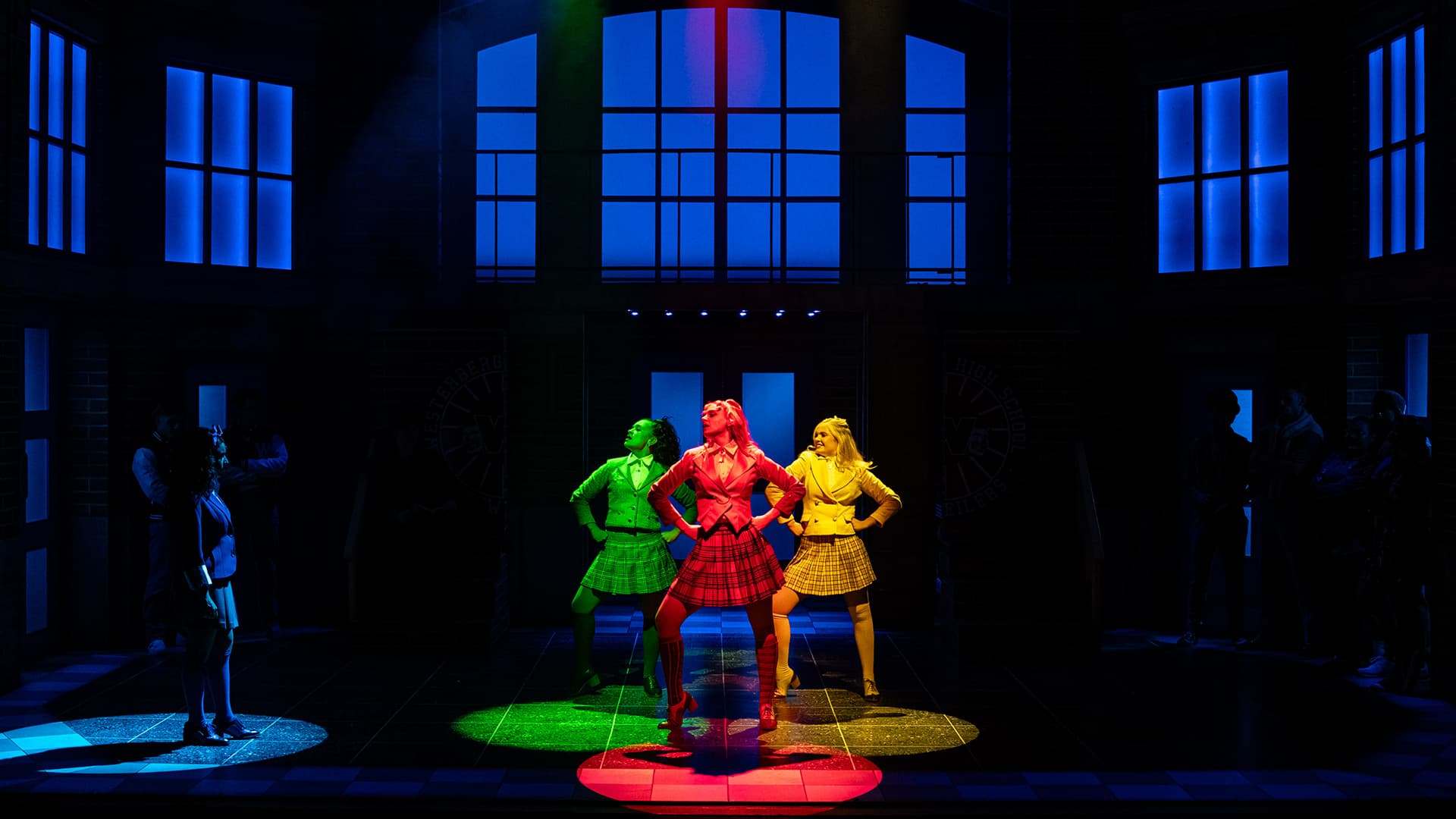





 Photos - Heidrun Lohr
For this reviewer, David Williamson is a familiar theatrical touchstone, when it comes to a playwright's propensity to lay bare the Australian soul and psyche. The Fence, however, takes the capacity for self-examination one small step, one giant leap further into that abyss. From director and conceptualiser, Alicia Talbot, comes this latest work under the auspices of UTP (Urban Theatre Projects), inspired by a chance convo with a security guy at the Adelaide Festival, back in '02. The prolonged gestation of 8 years has proved well-worthy; building on the established reputation garnered from precursors The Last Highway, Back Home & The Longest Night. Like its predecessors, The Fence zeroes in on the ways in which ordinary people deal with trauma; especially that engendered by the experiences of The Stolen Generations & Forgotten Australians. Just as the incidence of mental illness (1 in 5) can be easily extrapolated to touch the whole community, the suffering of these groups diminishes us all. And yet provides a profound opportunity for catharsis, healing, learning and growth. We are, one and all, victims of circumstance; the fickle finger of fate. It's how we deal with the circumstances that shape us that counts.
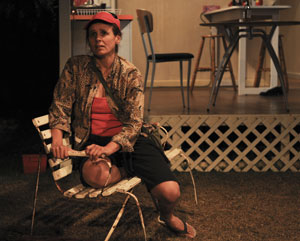
The above themes are explored, gently, compassionately, non-judgementally, patiently and thoroughly, via the experiences of a tight-knit group of friends and relos. But before we go there, a word about the innovative staging. One arrives at Parramatta's invaluable Riverside Theatres, itself the site of Parramatta's first gaol, built at the behest of the good governor of the day, one Cap'n Arfur Phil'p. One wends one's way under the Bernie Banton Bridge, to the underbelly and historic backblocks nearby, to an open area, beneath a fragrant frangipani, where a fire blazes in a decapitated drum. Adjacent is an Aboriginal man (Mel) conscientiously restoring a rustic, and rusted garden bench. Behind is his shed, which harbours secrets, memories, skeletons, and a few titty mags. Inside the denuded house, his white partner, Joy, is sizzling snags and tossing salad for their dinner. The voluptuous Lou, an indigenous woman with a freshly-broken heart, is staying. Chris, a friend, also Aboriginal, rocks up, too, as he often does, hiding out from the three women with whom he abides; or would, if he didn't find them so emasculating. The surprise visitor is Mel's long-lost sister, Connie. Like a ghost with borderline personality disorder (part-poltergeist, part-angel), she rattles the skeletons and shakes all the rotten fruit from the tree. But all this unfolds slowly, in real time; at the very pace we all know and live.
Indeed, the whole pathetic (in the orginal sense of the word) mess is so utterly, disarmingly naturalistic, with nary a hint of hyperbole or melodrama, one almost feels like a voyeur; as if one is peering through the windows of one's next door neighbours, secreted in an impenetrable lantana infestation.
Case in point: there are whole minutes of silence, just as their would be in a 'normal' home. The two blokes sit, and slouch, half-watching the footy, in the kind of cliched Aussie mock-absorption blokes adopt when women, whom they want to escape, are present. Moments like these are observed faithfully and convincingly; as with, say, Lou, reapplying makeup in anticipation of hitting the town. And, over the span of around 90 minutes, there is an undulating emotional landscape, just as their would be in a normal home: peaks of laughter; sharp spikes of disagreement; troughs of withdrawal and sulkiness.
There are, too, the veiled uncertainties and ambiguities of relationships: will Lou, for instance, triumph in her hints and overtures to Chris? How solid and unshakeable are the foundations of the intimacy between Mel and Joy? Will Chris ever go home, to face the music?
The Sydney Festival blurb describes it as 'explosive'. It's not. And that it isn't is precisely what makes it work so well: there is none of the high-pitched, histrionic theatricality that attends most conventional plays. That the actors, also 'devisors', have been informed by consultations with indigenous and non-indigenous community members, with similar experiences to those portrayed, has helped, it seems, no end, in firmly rooting the action in the fertile soil of authenticity.
In terms of craft, crossed conversations, singing along to favourite recordings (like the Steve Miller Band's The Joker), and even live performances of songs, galvanise the reality-checked performance, and help give it depth, context, vintage, colour and character.
As in any tortured family, whether composed of blood relations or close friends, there's the inevitability and constancy of conflicting tugs, in wildly different directions: is baby brother Mel's first loyalty to his big sis, Connie, or lover, Joy? Why does he even have to choose?
There are echoes of loss, pain, grief, dispossession, suspicion, broken trust, shattered expectations, jealousy, competition; and the promise of forgiveness, redemption, peace, love and compassion.
Structurally, there is no particular adherence to dramatic trajectory: we look through a window, into the current and past lives of several people; after an hour-and-a-half, the window gently closes, with the shadowy, ephemeral figure of Connie disappearing into the night, as surreptitiously as she arrived.
Alison Page's set, Neil Simpson's lighting and Liberty Kerr's sound design (notwithstanding a poorly executed mix of music and dialogue at the outset and the danger of dialogue being lost to the ether through lack of volume) adhere to reality as fast as the spontaneity reflected in performance.
Helen Dallas, while a little stiff to start, delivered a generous, open and warm-hearted Lou; Richard Green was the very quintessence of hen-pecked Chris, whose quiet, contained demeanour belies a well, and wealth, of expression, channelled through song; Kelton Pell is masterful in lending exposition and tangible depth to the demons and dilemmas lurking inside the kind, sensitive Mel; Skye Quill is commanding and compelling as the toughened, yet fragile, Joy; Vicki Van Hout creates the kind of, at once, earthy and unearthly presence required of Connie, whose name might as well serve as wry shorthand for conscience.
With the likes, in the background, of the muti-faceted, multi-talented Wayne Blair, as story consultant and community liaison, by Iina Kastoumis, drawing upon the all-too-true tales of prominent community members, such as Valerie Wenberg.
Congratulations are due, too, to Michelle Kostevski, who, as Executive Producer, pulled all the strings together, to strike such a resplendent chord.
This is not merely real Australian theatre, but the theatre of real Australia; the Australia too often ignored, lost, or overshadowed, in our quest for glamour and artifice. It's not just unmissable, it ought to be compulsory: for students, citizenship; all of us.
The 2010 Sydney Festival can be justifiably proclaimed a success, on the back of this work alone.
Finally, it's rare to encounter a play so judicious, restrained, and thoughtful, in its selection of music and songs. From Pell's haunting didj solo, to (Gayl) Lucinda Williams' Fruits of My Labour, Trent (Michael) Reznor's Hurt and Willie Nelson's easy rendition of Kris Kristofferson's Help Me Make It Through The Night, the one enriches the other: the drama lent shape and definition by the lyrical and melodic succinctness of the music; the songs reborn, informed by the extraordinary stories being told, intuited, and deeply felt.
Urban Theatre Projects presents
THE FENCE
Created and directed by Alicia Talbot
Venue: Meeting Point: Parramatta Riverside Theatre
Dates: Mon-Sat 14-16, 18-23, 25-30 January
Meeting time: 8.30pm
Tickets: Preview $30 | Full $45/$35
Bookings: Riverside Theatres (02) 8839 3399 www.riversideparramatta.com.au | Sydney Festival 1300 668 812 www.sydneyfestival.org.au
Web: www.urbantheatre.com.au